Good Shepherd Sisters
Small Things Like TheseThe Good Shepherd Sisters are responsible for the convent’s girls’ training school and laundry, institutions whose respectable public face is bound to the town’s everyday life. The laundry’s impeccable reputation coexists with persistent, disputed reports about the girls and women within the convent; when Bill Furlong encounters a young woman who has been confined there, the tension between reputation and care becomes a moral crisis.
Institutional Work and Public Reputation
The Good Shepherd Sisters run a training school that provides girls with a basic education, as well as a laundry business. The school is little known to people in town, but the laundry is widely trusted: restaurants, guesthouses, the nursing home, the hospital, priests, and well-off households send washing there. Even a large batch of bedlinen or a dozen handkerchiefs is said to come back looking as good as new. The institution’s visible service is practical and valued, giving it a regular place in the town’s commercial and domestic routines.
The convent itself stands prominently on a hill across the river from town, its broad gates and tall windows facing outward. Neatly maintained lawns, ordered shrubs, and clipped hedges contribute to its image of discipline and respectability. The immaculate laundry and carefully kept grounds help explain why the convent can be regarded as a reassuring institution even while knowledge of its internal life remains uncertain.
Rumors and the Convent’s Hidden Life
Talk about the training school unsettles its official description. Some townspeople claim that the girls are not students but girls of supposedly low character being reformed through penance and work, washing stains from dirty linen from dawn until night. A local nurse is said to have treated a fifteen-year-old with varicose veins caused by standing so long at the wash-tubs. These accounts are presented as reports circulating in the town, not as facts independently verified by the narrative.
Other stories shift the burden of hardship from the girls to the nuns themselves: some say the Good Shepherd Sisters knit Aran jumpers and thread rosary beads for export, are forbidden to speak, and subsist on bread and butter until they have finished their work and can have a hot dinner. Still other claims describe the convent as a mother-and-baby home, where unmarried girls are hidden after childbirth and their babies adopted by wealthy Americans or sent to Australia. The competing accounts expose how little the town knows, while also making clear that its gossip does not amount to a settled account of what happens inside. The convent’s reputation is therefore made from both trusted service and rumors of discipline, deprivation, and separation.
Authority and the Young Woman in the Shed
Furlong’s direct encounter gives the rumors a more immediate human stake. He finds a young woman who has spent the night locked in a shed at the convent. Waiting outside with him, she asks him to ask about her baby: the child is fourteen weeks old, has been taken from her, and may be hungry. She does not know where he is. Her need is specific and urgent, in contrast with the institution’s public language of training and care.
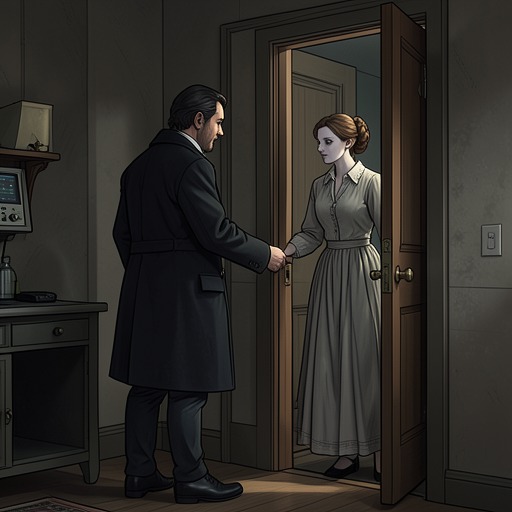
When the Mother Superior meets Furlong, she apologizes that he has had to encounter the situation, then tells the young woman she had been missing from her bed and that the Gardaí were about to be called. She describes the girl as someone who sometimes cannot tell night from day and says she does not know how they will manage her. The response redirects attention from the confinement and the separated infant to the girl’s condition and the difficulty of caring for her. Later, after handing Furlong an envelope and expecting him to leave, the Mother Superior escorts him as far as the kitchen. A young nun is preparing food, but the girl sits dazed at the table with nothing before her. Furlong pauses rather than going on and offers help; the girl looks toward the window, breathes, and begins to cry. The scene makes the gap between institutional custody and the immediate act of attending to someone’s need visible without resolving the larger questions about the convent’s practices.
Economic Ties and Moral Significance
The Good Shepherd Sisters’ relationship with the town is not only religious or charitable. Their laundry pays what is owed on time, a fact Eileen Furlong invokes when she argues that the convent’s troubles have nothing to do with her family and that the girls need a fire like anyone else. Her defense joins the sisters’ dependable commercial dealings to the town’s reluctance to intervene. Furlong’s own business also depends on customers who pay late or ask to put debts on the slate, so the convent’s prompt payments carry material weight within a community facing hardship.
The Mother Superior later stresses the difficulty of finding places for everyone and points out that only a wall separates the convent from St Margaret’s School. Her practical reasoning sits alongside the earlier image of a girl locked in a shed and separated from her baby. Near the end, Furlong questions whether a person can call himself Christian while never being brave enough to oppose what is happening. His decision to help the young woman turns the convent from a distant institution sustained by reputation and routine into the immediate setting of a choice. The Good Shepherd Sisters’ significance lies in this tension: their useful services and economic reliability are real, but neither can settle the moral claims raised by the girl’s confinement and appeal for her child.